Every child reacts to the dentist differently. Some climb into the chair and open wide. Others cry, pull away, or refuse to come through the door.
A child may be a good candidate for sedation dentistry when significant anxiety, a very young age, a strong gag reflex, special healthcare needs, or a long treatment plan make it hard to complete care safely and comfortably without extra support. That said, a nervous child does not automatically need sedation. The right answer depends on your child's health, temperament, age, and the dental work that needs to be done.
At Strong Smiles Pediatric Dentistry in Strongsville, OH, we sit down with parents and look at the whole picture before recommending anything. Here is how we think about it, and what you can look for at home.
Being a good candidate has nothing to do with being "bad" at the dentist. Children are considered for sedation dentistry for practical, clinical reasons, and often more than one of them applies at once.
Some fear is normal. Intense fear is different. If your child becomes so distressed that treatment cannot safely go ahead, sedation may help them get through necessary care without being overwhelmed.
Very young children often cannot hold still or keep their mouth open for long, and that is not a behavior problem. It is development. Some procedures need a still, calm patient to be done safely, which is one reason age is part of the conversation.
A child who needs several fillings, crowns, or other work, for example after untreated cavities in baby teeth, may struggle to cope with many separate visits. Sedation can make it possible to complete more in fewer appointments.
A sensitive gag reflex can make dental imaging, impressions, and some treatments upsetting for a child. Light sedation sometimes takes the edge off.
Developmental, sensory, or medical differences can make a standard dental visit overwhelming. If your child has additional needs, our approach for patients with special healthcare needs starts with understanding what your child finds hard, and sedation is one tool among several.
You know your child better than anyone. These are some of the patterns we hear about most often from parents:
One difficult visit does not mean your child needs sedation. Children often settle with time, patience, and a gentle team. But if appointments keep ending in tears or refusal, it is worth having a conversation, particularly when your child has a cavity or infection that needs to be treated.
Sedation is never our first step. For many nervous children, communication, praise, and gentle behavior guidance techniques are enough to get through a visit comfortably.
When they are not, this is how we usually work through the decision with you:
The recommendation comes from your child's needs, not from how loudly they protest.
There are different levels of sedation, and the right one is the lightest that allows your child's treatment to be completed safely.
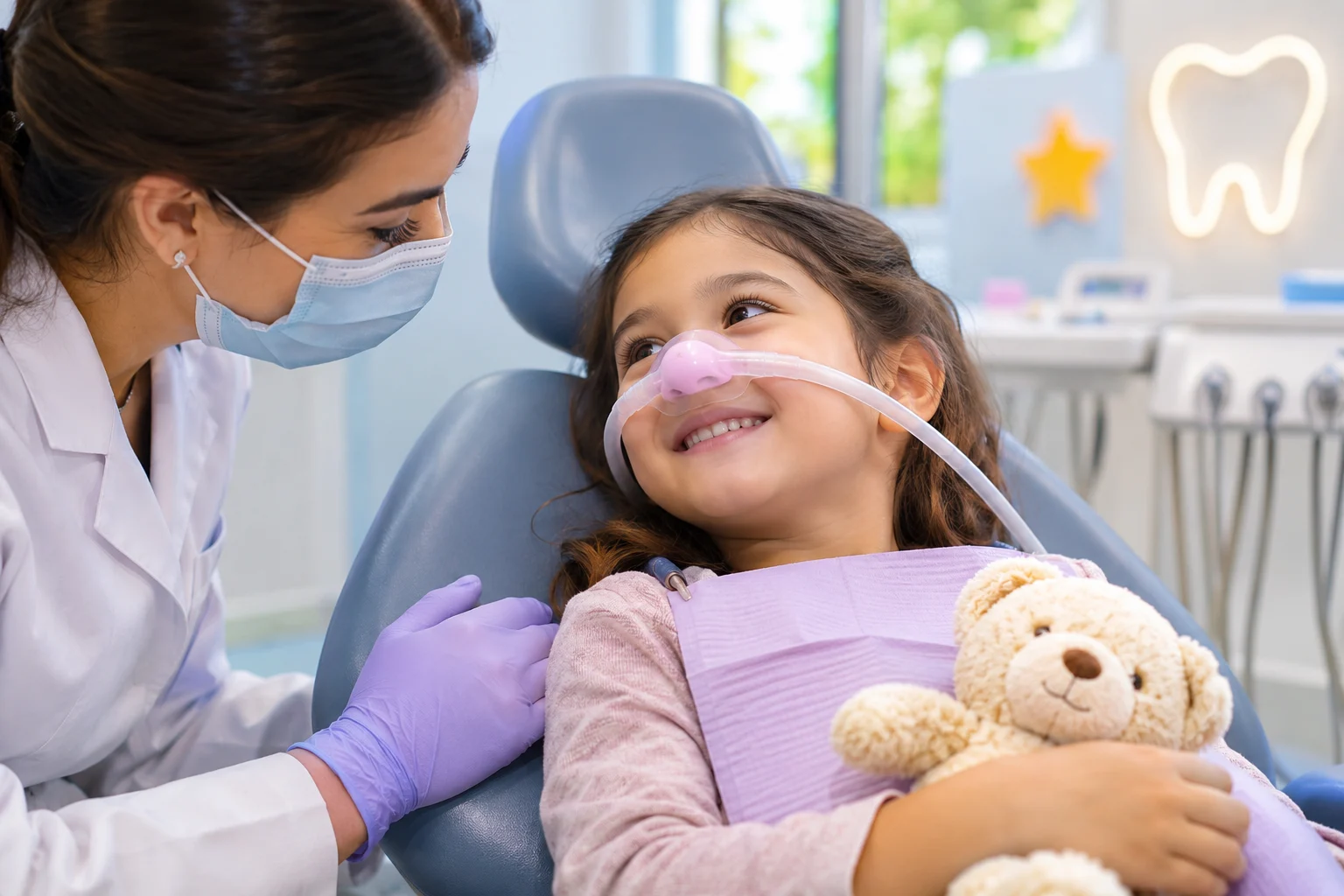
Nitrous oxide is a gentle option for children with mild to moderate anxiety. Your child breathes it through a small nose mask, stays awake, and can talk with us. Most children describe feeling light or a little silly, and the effect fades quickly once the mask is removed.
Some children need a different approach, particularly those who need extensive treatment or cannot tolerate dental work while awake. With IV sedation in our office, your child is comfortably asleep during treatment, and an anesthesiologist looks after them throughout. This often allows us to complete all of the treatment in one appointment, rather than putting your child through several stressful ones.
IV sedation visits typically run for around one to two hours, and we will go over what that looks like for your child before the day arrives.
Parents often ask which one is better. Neither is better in general. They suit different situations.
Nitrous oxide tends to fit when:
IV sedation may be considered when:
Anxiety level is only one part of the decision. Health, age, and the dental work itself carry just as much weight.
Sedation is not right for every child, and sometimes it simply needs a different plan or a different day.
Certain medical conditions, especially those that affect breathing, the airway, or the heart, can change how sedation is planned. Some regular medications can interact with sedatives. A cold, cough, or fever on the day may mean we reschedule, because a blocked nose makes nitrous oxide harder to use and breathing matters during any kind of sedation. And a child who cannot yet follow even simple instructions may need a different option than nitrous oxide.
This is why a complete health history matters so much. If your child's pediatrician has raised any concerns, tell us. We would rather know and adjust than find out halfway through.
When it is planned carefully and the right people are in the room, sedation is a well established part of pediatric dental care. Safety depends on who is giving it and how closely your child is watched.
According to the American Academy of Pediatrics, for deep sedation or general anesthesia at least two people trained in advanced life support must be in the room, and one of them must be an independent observer, such as an anesthesiologist, rather than the dentist doing the treatment. You can read their guidance for parents on anesthesia and sedation for dental work for yourself.
That is one reason our IV sedation is provided with an anesthesiologist, so someone other than your child's dentist is focused on their breathing and comfort for the entire visit.
Whichever practice you choose, these questions help you feel confident about the plan:
We are happy to answer all of these before you commit to anything.
Before any sedation, we need accurate and complete information about your child. Please tell us about:
Small details matter here. Something that seems unrelated, like a recent stomach bug or a new medicine, can change the plan. If you are unsure whether to mention it, mention it, and let us decide.
Your child may be sleepy, a little unsteady, or unusually quiet for a while afterward. How long that lasts depends on the type of sedation used. After nitrous oxide, most children recover quickly. After IV sedation, they need more time to wake fully and rest.
You will get clear instructions about eating, drinking, activity, and supervision. Please follow them closely, and do not assume your child can go straight back to school or playing outside. Our guide on how to prepare for a sedation appointment in Strongsville walks through fasting, what to wear, and aftercare in more detail.
Sometimes. Sedation can help a child complete treatment without a frightening experience, which makes later visits easier. But it works best as one part of a bigger plan, not the only one.
Trust is built over time. Predictable visits, simple explanations, and plenty of praise teach children that the dentist is a safe place. If you would like to understand how fear develops and how sedation can ease it, read our post on how sedation dentistry can make dental visits stress free. And if your child has not been in yet, a relaxed first visit is a good way to start building that comfort before any treatment is needed.
Your calm sets the tone. Children pick up on nervousness quickly, so keep your own voice steady and your explanations short.
Avoid threats or bribes tied to behavior, such as warning that something bad will happen if they do not cooperate. Let our team explain procedures in words that suit your child's age, and celebrate effort rather than perfection. A child who tried hard and cried a little still did something brave.
If dental visits keep ending in tears, fear, or refusal, your child may need more support than encouragement alone. Sedation can be a good fit for the right child, and the decision should always be made around your child.
If you are looking for a sedation dentist for your child in Strongsville, OH, schedule a consultation with Strong Smiles Pediatric Dentistry. We will review your child's health, anxiety level, and dental needs, and help you understand which options make sense.
Who is a good candidate for sedation dentistry?
Children with significant dental anxiety, difficulty staying still, extensive treatment needs, a strong gag reflex, or certain healthcare needs may be candidates. The dentist has to evaluate each child individually, including their health history.
Is sedation dentistry only for anxious children?
No. Anxiety is a common reason, but sedation may also be considered for very young children, children who need a lot of treatment, or those who cannot stay still long enough for safe care.
Is nitrous oxide safe for young children?
It is commonly used in pediatric dentistry and suits many children, depending on their age, health, and ability to breathe through the nose and cooperate. Your dentist will confirm whether it is right for your child.
Will my child be awake with nitrous oxide?
Yes. Your child stays awake and can talk with us, but feels calmer and more relaxed.
Will my child be asleep with IV sedation?
Yes. With IV sedation, your child is comfortably asleep during treatment, and an anesthesiologist cares for them throughout. We will explain exactly what to expect before the day.
Can sedation be used for a routine cleaning?
It can be considered in select cases, but most children do not need sedation for a routine cleaning. Gentle guidance and a calm team are usually enough.
Does sedation replace good behavior?
No. Sedation is a clinical tool, not a way around behavior. Its purpose is to let your child receive necessary care safely and comfortably when they cannot manage it awake.
How should I prepare my child for sedation?
Follow every instruction we give you about food, drinks, medications, arrival time, and supervision afterward. Keep your explanation to your child simple and calm.
Can my child eat after sedation?
We will give you specific instructions based on the type of sedation and the treatment performed. Children usually start with small sips and soft foods once they are fully awake.
What if my child is still afraid after sedation?
Tell us. It helps us adjust future visits and add other ways of easing anxiety, and many children grow more comfortable as they have positive experiences.